
Most HubSpot onboarding focuses on the platform. Ours focuses on your business. Before we configure a single workflow or build a single dashboard, we map how your team actually sells, where leads come from, how handoffs work, and what leadership needs to see. The portal gets built around that. Not the other way around.
We design the architecture, build it with you, train your team on the system as it actually works, and stay involved until adoption is real.

HubSpot is live. The team has logins. But three months in, reps are logging inconsistently, pipeline stages don’t mean much, and the reporting your leadership asked for still isn’t there.
This is the most common onboarding outcome for mid-market B2B companies. Not because HubSpot doesn’t work, but because getting it to work requires more than turning on the right features.
It requires designing the system around how the team sells, training people on the decisions behind the build, and staying close enough after launch to catch what isn’t working before it solidifies into a bad habit.
Onboarding done right doesn’t just get you live. It gets you to a system your team can trust and use effectively.
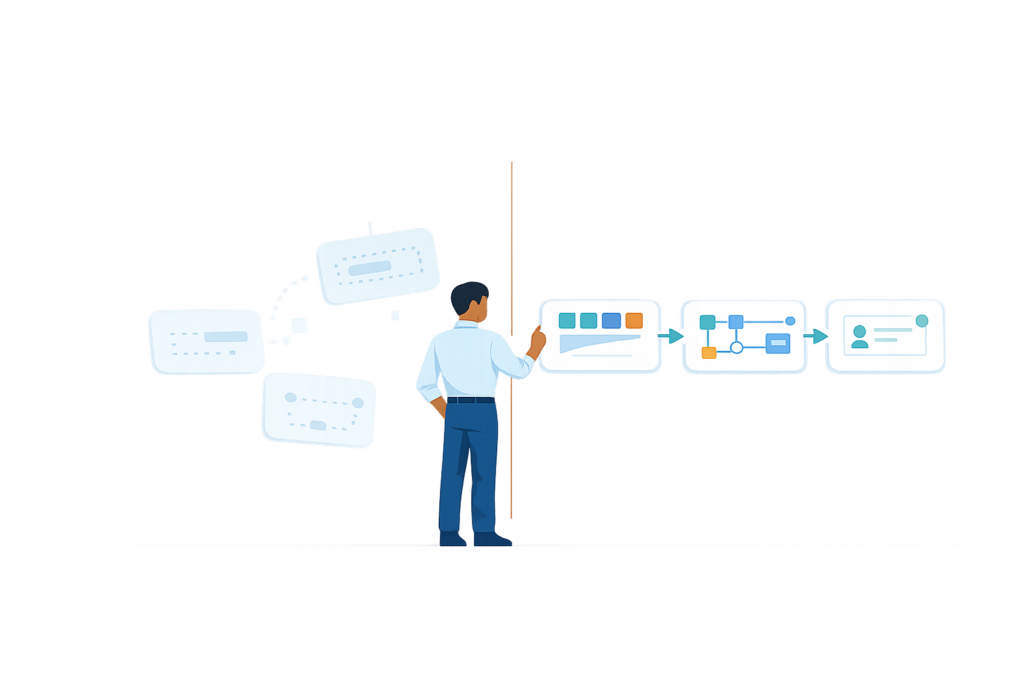
The companies that get the most from HubSpot onboarding treat the first two weeks as a design exercise, not a setup task.
When that foundation is in place, the portal becomes a system that reflects how the business works rather than a tool the team works around. That is the difference between onboarding that sticks and onboarding that gets rebuilt in 18 months.
We handle the full setup if you’re starting fresh, including portal creation, hub selection, and initial configuration. If you already have HubSpot, we start with an audit of your current state before making any recommendations on what to keep and what to rebuild.
HubSpot’s onboarding orients you to the platform. Ours is focused on how the platform gets configured for your specific sales motion. We make architecture decisions, build the system around your process, train your team on what was actually built, and stay engaged post-launch. The scope is more strategic and more hands-on.
For most mid-market companies, a full onboarding runs 6 to 8 weeks from kickoff to launch. The range depends on the complexity of your sales process, how many Hubs are in scope, and whether any integrations are involved. We give you a specific timeline after the initial discovery session.
Onboarding works best when there is at least a working sales motion to configure around. If your process is still being defined, we can help you document it first. In some cases that is actually the most valuable part of the engagement, because it forces clarity that the team has been operating without.
A project lead with authority over process and systems decisions, two hours for a structured discovery session in week one, and access to your existing portal if you have one. The more context we have on how deals actually move through your pipeline, the better the build.
Most clients move into a retained RevOps engagement post-onboarding, covering ongoing optimization, new workflow builds, and reporting improvements. We also offer a standalone 30-day post-launch review for teams that want a structured check-in before going independent.
Yes. Common integrations include Salesforce, NetSuite, billing platforms, and marketing tools. We scope integrations specifically during discovery so there are no surprises on timeline or complexity.
Adoption is part of the deliverable, not an afterthought. We conduct role-specific training before launch, produce quick-reference documentation, and do a 30-day check-in specifically to identify and address adoption gaps while they are still easy to fix.
You may have been through a version of this before. A portal that got configured quickly, a team that got a generic walkthrough, and an adoption rate that never reached what leadership expected. The issue is almost never the platform. It’s that the build didn’t start with how the team actually sells.
We start every onboarding engagement with a structured discovery session before opening the portal. We document your pipeline, your handoffs, your reporting requirements, and your team’s daily workflow. The build comes after. That sequence is what makes the difference between a system that gets used and one that gets worked around.
Not at every stage. If you are pre-sales motion or still figuring out your ICP, the most valuable investment right now is probably defining those fundamentals rather than operationalizing them. We can help with that too, and will tell you directly if that is where you should start.
If you have a working sales team, a defined pipeline, and leadership that is ready to commit to the system being built around how they actually sell, this is the engagement that gets you there.
Fill out the form and we will get back to you within one business day. We will ask about your current setup, what you have already tried, and whether this engagement makes sense for where you are. No pitch deck. No pressure.